Pet Care Tips · 30 Sep 2026
House Training a Puppy: A Simple Routine That Works
The fastest way to house train a puppy is a steady, reward-based routine: take your puppy outside at predictable times, wait quietly in the same spot, and reward them the moment they go. Add close supervision indoors and calm handling of accidents, and most puppies learn where the toilet is over a few weeks. Here is a simple routine you can start today.
Why a Routine Works
Young puppies have small bladders and little control, and they do not yet know that the house is off-limits. A routine removes the guesswork for both of you. When outings happen at the same moments every day, your puppy gets many chances to go in the right place, and every success earns a reward. Over time, going outside becomes the habit and accidents become rare.
When to Take Your Puppy Out
Plan an outing at these key moments:
- Right after waking up, including after naps.
- Shortly after eating or drinking.
- After play or any exciting activity.
- Every 1–2 hours for young puppies, even if none of the above has happened.
- Before bed and during the night for very young puppies, who usually cannot hold it until morning.
Watch for signs such as sniffing the floor, circling or suddenly wandering off. If you see them, head outside straight away.
The Step-by-Step Toilet Routine
- Clip on the leash. Take your puppy out on a leash so you can guide them to the same toilet spot every time.
- Go to the same spot. Familiar smells help your puppy understand what this place is for.
- Stand quietly. Avoid playing or chatting. Let your puppy sniff and focus.
- Add a quiet cue. As your puppy starts to go, softly say a short word such as "go potty". Over time they will link the word with the action.
- Reward right there. The moment they finish, give a small treat and warm praise on the spot, not once you are back inside.
- Then enjoy some play. A short game or a little stroll after success makes going quickly worthwhile.
- No success? Try again soon. If nothing happens after a few minutes, go back inside and place your puppy in a safe zone, for example a small area behind a gate, for 10–15 minutes. Then head out and try again.
Supervision Indoors
Most accidents happen when nobody is watching. While your puppy is loose in the house, keep them in sight. When you cannot supervise, use a small safe space. A SafeGate pet barrier is an easy way to block off a room or hallway so your puppy can rest safely without free access to the whole home.
Night-Time Outings
Very young puppies usually need one or more trips outside during the night. Keep these outings calm and boring: leash, toilet spot, quiet cue, reward, and straight back to bed. Skip the play at night so your puppy learns that night-time is for sleeping.
How to Handle Accidents
Accidents are a normal part of learning. How you react matters:
- Interrupt calmly. If you catch your puppy in the act, make a gentle sound to interrupt and take them outside to their spot. If they finish there, reward them.
- Clean thoroughly. Use an enzymatic cleaner, which breaks down odours that could draw your puppy back to the same place.
- Never punish. Do not scold, shout or rub your puppy's nose in it. This only teaches them to fear you and to hide when they need to go.
Outdoors, pick up after your puppy every time. A GrabIt poop scooper makes this quick and hygienic, and a clean toilet spot is more pleasant for everyone.
Be Patient: Progress Takes Weeks
Every puppy learns at their own pace. Expect a few weeks of consistent practice, with good days and setbacks. Gradually, the time between outings can grow as your puppy shows they can wait longer. If your puppy suddenly has many more accidents, drinks much more than usual, or seems uncomfortable when going, please speak to your vet, as health issues can affect toilet habits.
FAQ
How often should I take my puppy out?
For young puppies, after waking, eating and playing, and roughly every 1–2 hours in between. As your puppy grows and succeeds, you can slowly stretch the gaps.
Should I use puppy pads?
Pads can help in some situations, but they can also teach your puppy that going indoors is fine. If your goal is outdoor toileting, focus on regular outings and a consistent spot.
What if my puppy goes right after coming back inside?
This is common. Next time, stay outside a little longer, then use the safe zone for 10–15 minutes before trying again, and keep a close eye on them in between.
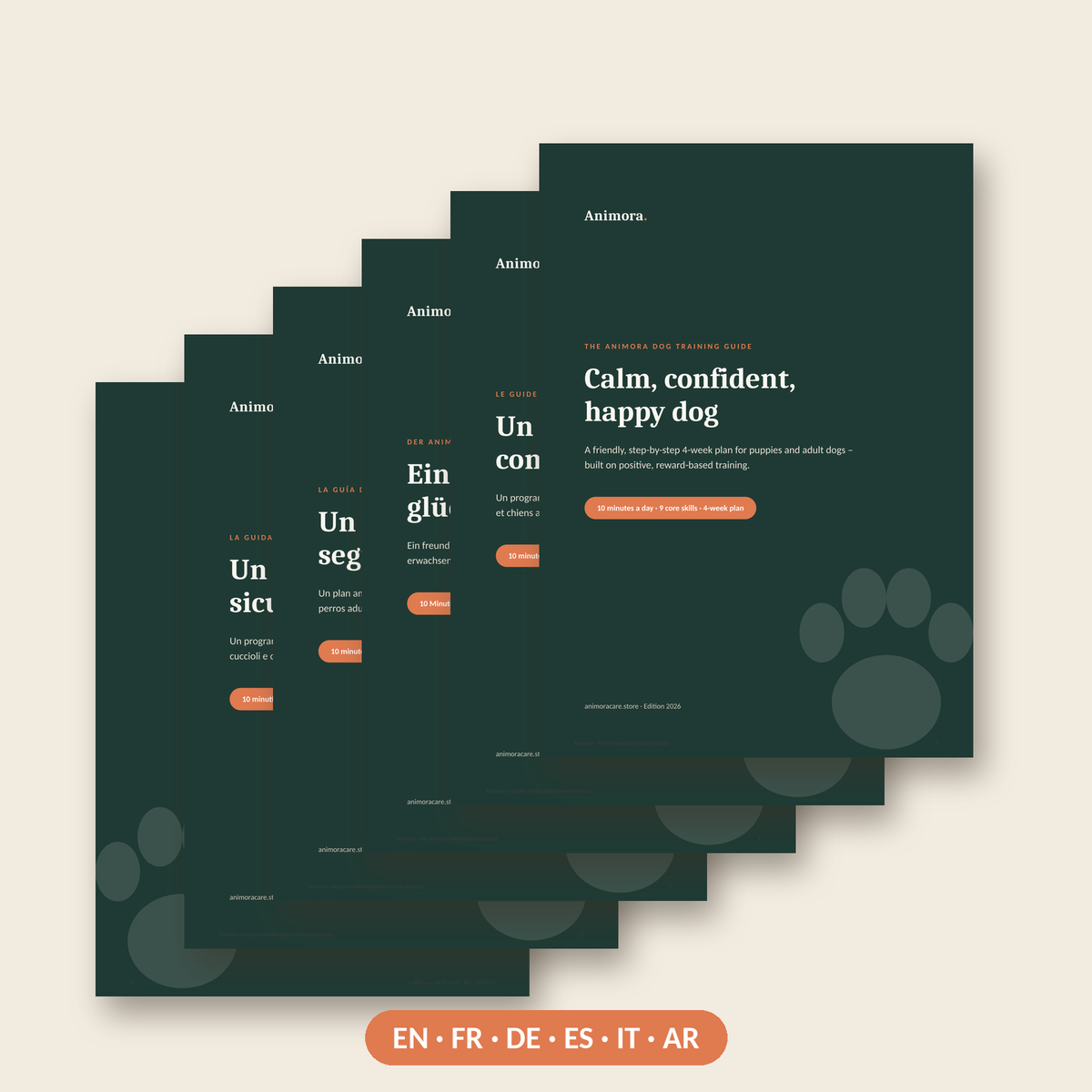
Want a clear plan for toilet training and beyond? The Animora Dog Training Guide walks you through reward-based training step by step, in six languages.